A Structured Framework For Adult Functioning, Regulation, and Sustainable Capacity
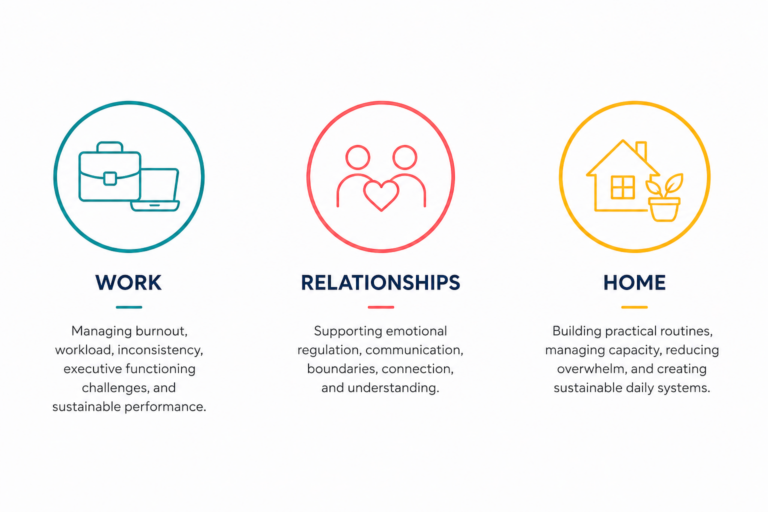
Many adults experience overwhelm, burnout, inconsistency, emotional exhaustion, or cognitive overload without fully understanding why.
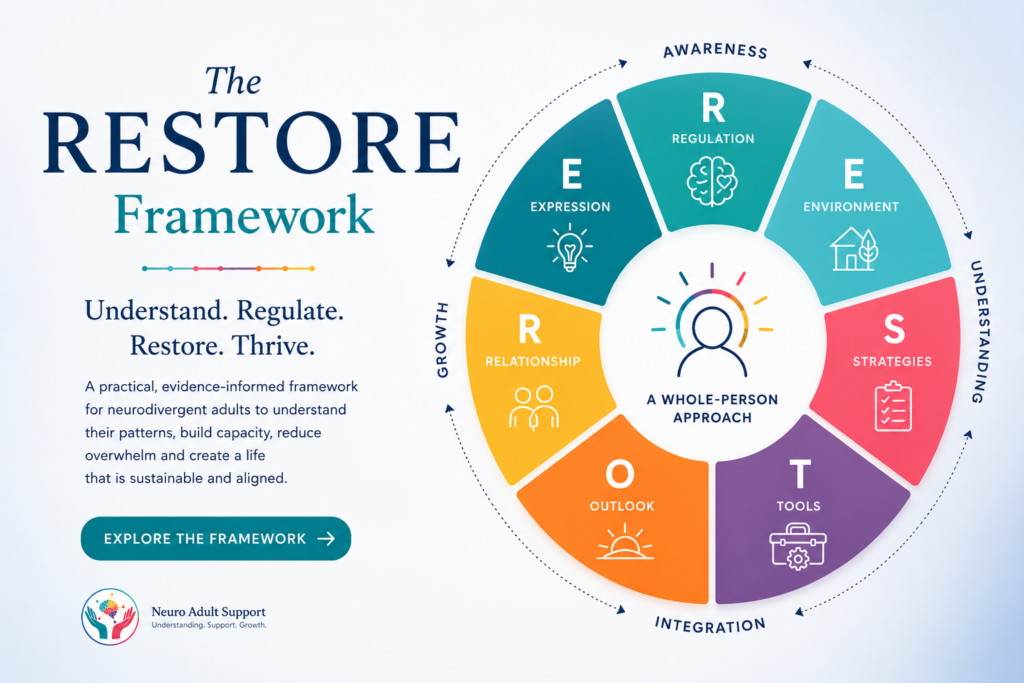
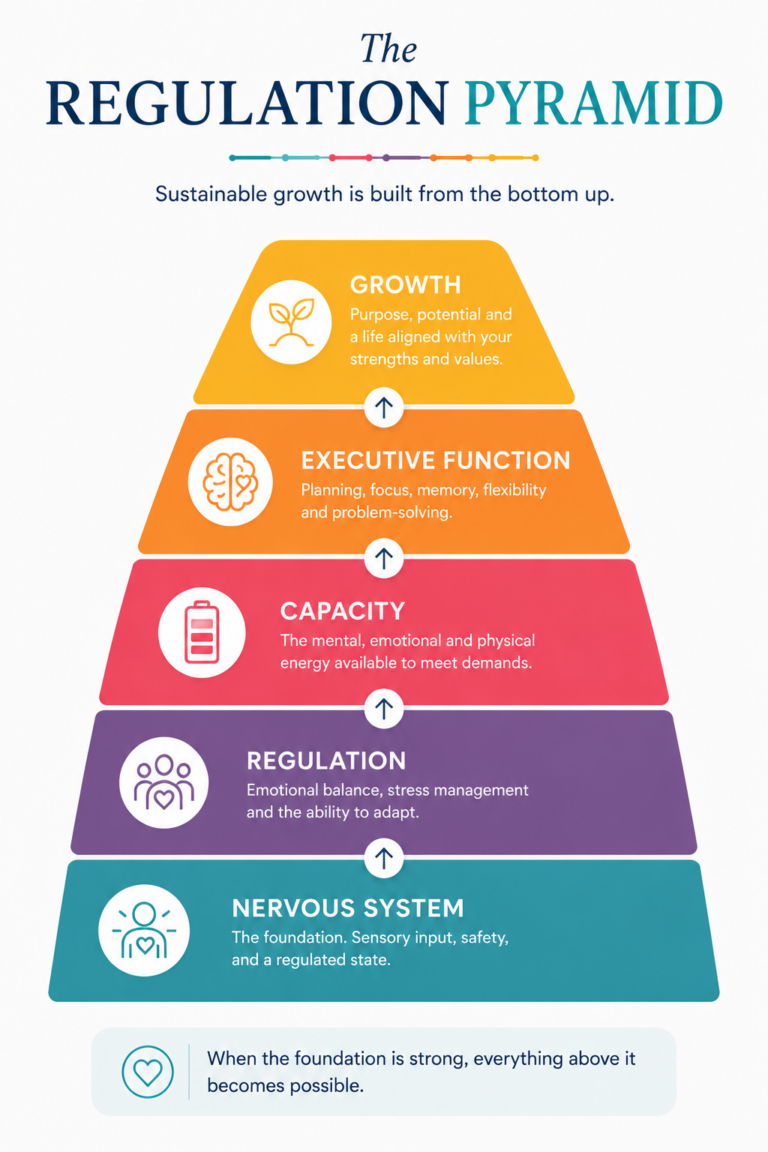
The RESTORE™ Framework helps individuals understand the interaction between regulation, executive functioning, emotional wellbeing, environmental demands, recovery, and sustainable capacity.
Rather than focusing only on symptoms or labels, the framework seeks to identify the underlying factors contributing to a person’s difficulties and develop practical, sustainable strategies for growth.
The goal is simple:
To understand what is happening beneath the surface and create ways of functioning that are effective, sustainable, and aligned with the individual.
The RESTORE™ Framework was developed by Jouré Rustemeyer following more than 20 years of experience in neurodiversity support. Meet the creator here
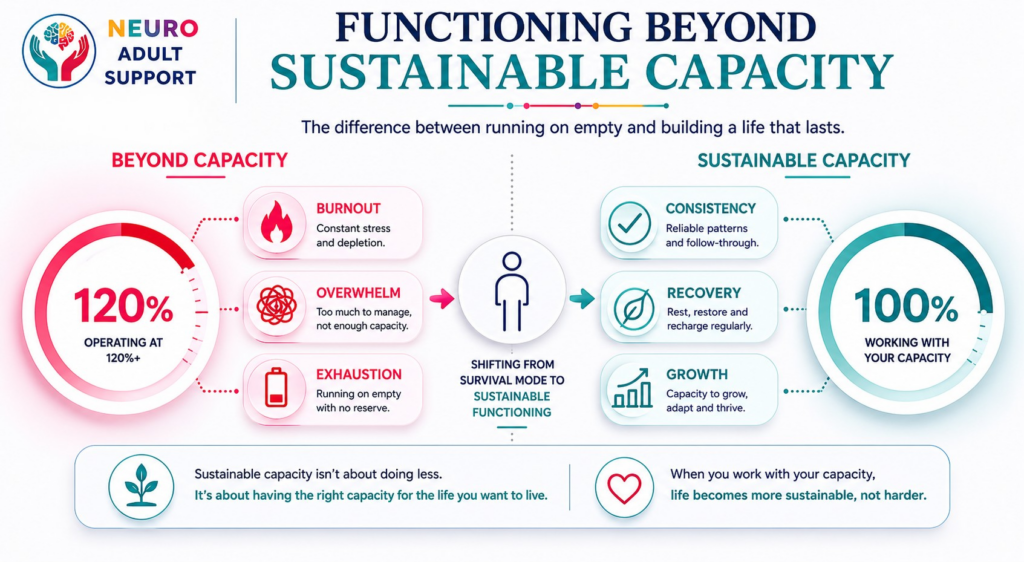
"Many adults are not failing because they lack discipline, but because they are functioning beyond sustainable capacity."
Overwhelm
Burnout
Exhaustion
Stress
Functioning
Inconsistency
Executive function
Routines
Capacity
Cognitive fatigue
Overworking
Recovery problems
Who The Framework Is For
The framework is designed for adults who may experience:
Chronic overwhelm
Burnout or shutdown
Emotional exhaustion
Difficulty coping with modern life demands
Inconsistency despite strong insight or intelligence
High internal pressure
Stress-related dysregulation
Cognitive fatigue
Difficulty sustaining routines
Cycles of overworking followed by collapse
Problems with emotional regulation
Difficulty translating insight into action
Persistent feelings of being “stuck”
Some individuals may have ADHD, autism, trauma histories, anxiety, or other neurodivergent profiles. Others may simply feel that their current way of functioning is no longer sustainable.
A formal diagnosis is not required.
Areas Commonly Explored Within The Framework
Depending on the individual, support may include:
Nervous system regulation
Capacity mapping
Burnout and recovery patterns
Emotional regulation
Stress and overload management
Executive functioning support
Attention and consistency difficulties
Structured rest and recovery
Behavioural pattern analysis
Sustainable routine development
Cognitive load management
Sensory and environmental factors
Identity and self-concept
Internal pressure and perfectionism
Sustainable functioning strategies
The framework is adaptive and tailored to the individual.
What Makes The RESTORE™ Framework Different?
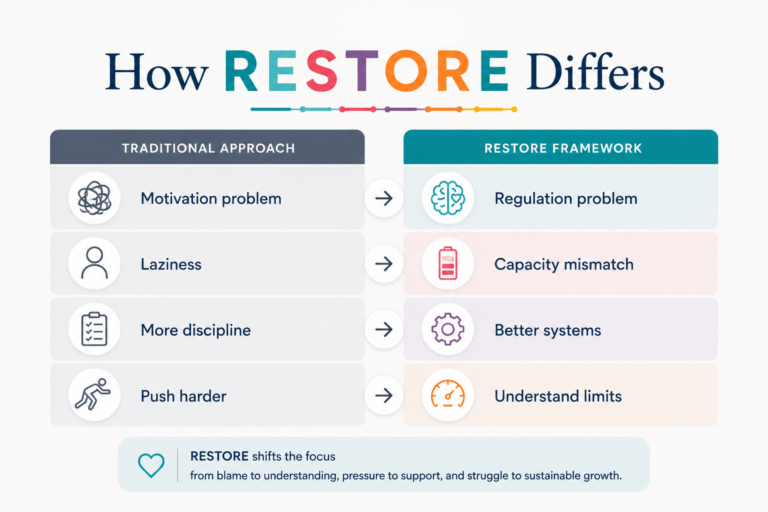
Many approaches focus only on surface-level productivity, motivation, or symptom reduction.
The RESTORE™ Framework instead focuses on the mechanisms underneath a person’s difficulties.
For example:
What appears to be procrastination may actually be cognitive overload.
Emotional reactivity may reflect nervous system strain rather than a personality flaw.
Inconsistency may emerge from capacity depletion rather than lack of discipline.
Chronic exhaustion may reflect years of compensating beyond sustainable limits.
The framework therefore focuses on understanding patterns before attempting to change behaviour.
This creates support that is more individualised, practical, and sustainable over time.
A Different View Of Functioning
Many adults have spent years believing they are:
Lazy
Weak
Too emotional
Disorganised
Failing
Undisciplined
Overreacting
“Not coping properly”
In many cases, people are attempting to function under chronic cognitive, emotional, environmental, or nervous system strain without adequate understanding, support, or recovery.
The RESTORE™ Framework approaches functioning through the lens of capacity, regulation, sustainability, and real-world demands.
The goal is not to force people into constant optimisation or unrealistic standards.
The goal is to help people function more sustainably, with greater clarity, self-understanding, and stability.
The Goal Of The Framework
The framework aims to help individuals:
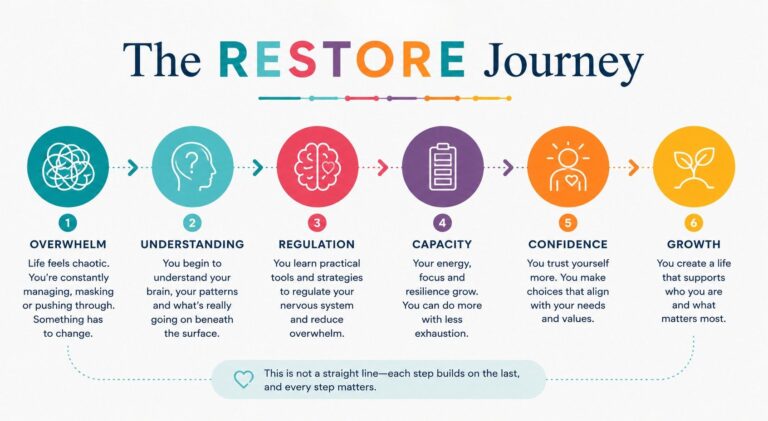
Understand themselves more accurately
Reduce chronic overload
Improve emotional and nervous system regulation
Build sustainable structure
Develop more realistic expectations of capacity
Improve consistency without self-punishment
Recover from chronic stress and burnout patterns
Create ways of functioning that are sustainable long term
Working Together
Support is tailored to the individual and may include:
One-on-one sessions
Structured support planning
Psychoeducation
Strategy development
Nervous system and regulation work
Executive functioning support
Capacity and burnout analysis
Behavioural and environmental restructuring
The work is collaborative, practical, and grounded in real-world functioning.
Enquire About Adult Support
If you would like to enquire about support, you can make contact through the enquiry form below.
Please note: this service is educational and support-based in nature and does not replace psychiatric, psychological, or medical care.