
My Love
My Love,
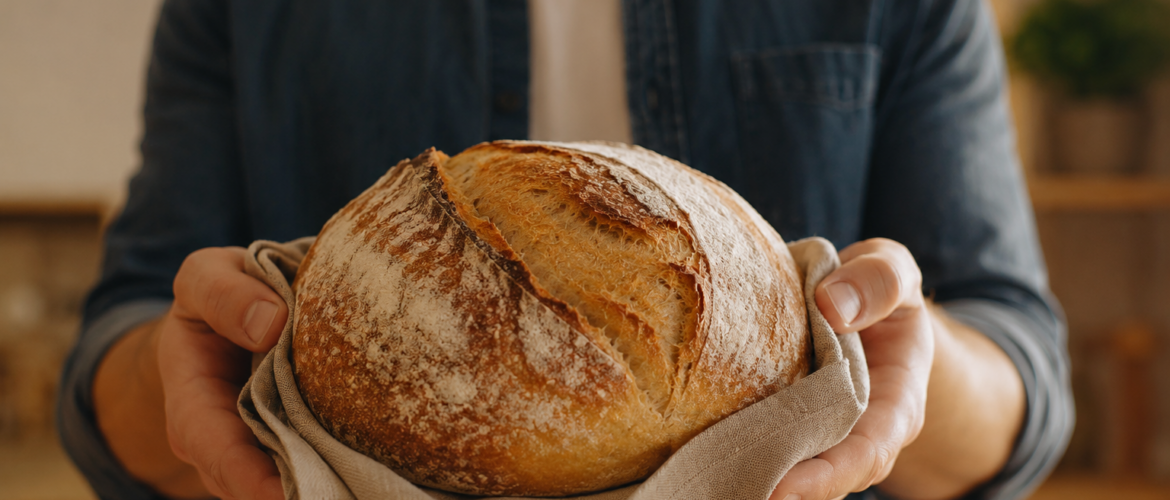
I’m sorry I forgot the bread.
I know that sounds like a ridiculous way to begin a letter, especially considering that this isn’t really about bread. In fact, if I’m being completely honest, by the time you read this I may not even remember whether it was bread. It could have been milk. It could have been lemons. There have been enough versions of this moment over the years that they have started to blend together. What I do remember very clearly is your face when I came through the front door.
You looked in the shopping bag before I had even put it down. I noticed that immediately because it wasn’t the first thing I noticed. The first thing I noticed was that you seemed hopeful. We had guests coming that evening, and you were trying to get everything ready, and there were already three different things happening in the kitchen at once. Then you looked inside the bag, and I watched the hope disappear. Not dramatically. Not angrily. Just quietly.
What struck me was not your disappointment. It was your familiarity.
You looked exactly like somebody who had seen this film before and already knew how it ended.
There was a time when moments like that led to arguments. I remember one particular occasion when I forgot the wine you needed for that dinner party at our house. You were furious. At the time I remember feeling defensive because I had genuinely tried to remember it. Looking back, I think the reason you were so angry had very little to do with wine. Nobody has ever had their life ruined by a lack of wine. You were angry because it wasn’t really about the lemons. Although, somewhere while writing this letter, I’ve managed to turn the wine into lemons, which probably tells you everything you need to know. It was about what the wine represented. It was about making a request and feeling as though the request had disappeared somewhere between your mouth and my brain. It was about feeling unseen. It was about wondering how something that felt important to you could vanish so completely from my awareness. As if I treat your requests as something to write off and dismiss immediately.
The funny thing is that I remember that dinner party surprisingly well. I remember standing in the kitchen while everybody was eating and Mike telling that story about getting lost on holiday. I can never remember exactly where we were. My first instinct is to say Portugal, but I think that’s because the story involves seafood and my brain seems to have decided that seafood automatically means Portugal. It might actually have been Spain. I suppose I could ask him, although if I ask him now he’ll probably spend twenty minutes correcting details that nobody else remembers. He’s always been like that. I once watched him spend half an hour explaining why everybody else’s memory of a holiday was wrong and then confidently point at a church in the distance and tell us he’d visited it before, only for us to discover it had been built after the year he claimed he’d seen it. I’d forgotten about that until this moment. It was actually quite funny because he spent the rest of the afternoon insisting that the church had somehow been moved. The more impossible the explanation became, the more committed he seemed to become to it.
I’ve just realised I’ve wandered a long way away from what I was talking about. Actually, maybe that’s the point. Because this is what it’s like.
The forgotten bread. The missed appointment. The unfinished task. The lost keys. What people don’t always see is everything that happened in between.
If you could sit inside my head for an afternoon, what would probably surprise you isn’t that I forget things. It’s how many things are competing for attention at any given moment.
When you asked me to buy bread, the request didn’t disappear. That’s the part I need you to understand. It didn’t simply evaporate. In fact, I probably remembered it several times. I likely remembered it while getting my car keys. I probably remembered it while driving. I may even have remembered it while walking through the supermarket doors. The difficulty is that remembering one thing does not stop fifty other things from arriving at exactly the same time. All equally loudly and equally demanding. All telling me they are the most important.
While walking through the supermarket I might suddenly remember an email I haven’t answered because someone looked like the person I was supposed to email. That email reminds me of a conversation. The conversation reminds me of a deadline. The deadline reminds me of a deadline I missed yesterday. Then I see an ingredient and remember a recipe somebody recommended six months ago. Then I wonder whether we still have enough coffee at home. Then I remember I needed to call somebody, but I am not sure who and why. Then I notice something on special and think about whether we need it. Then I remember something entirely unrelated from ten years ago for reasons I cannot adequately explain.
The easiest way I can describe it is that most people seem to experience thought as a sequence. I experience thought as a web.
Everything connects to everything else.
Actually, that’s not quite true. Some things connect far more strongly than others. That’s probably why I can remember a conversation from fifteen years ago and completely forget where I left my wallet thirty minutes ago. I still remember something my teacher said to me when I was twelve. I was staring out the window instead of paying attention, and she said, “You are so intelligent and could do so well if you could just focus.” What’s strange is that I don’t remember what she was teaching. I don’t remember the lesson. I don’t remember what happened before or after. But I remember that sentence. I think a lot of people with ADHD collect sentences like that. Little comments that were meant to be helpful but slowly became part of how we see ourselves.
Anyway, that wasn’t where I was going.
What I was trying to explain is that people often assume ADHD means that nothing feels important enough. The reality, at least for me, is often the exact opposite. The problem isn’t that I don’t care about things. The problem is that I care about too many things simultaneously.
The bread matters.
The bill matters.
The thing I promised my sister I’d sort out matters.
The strange smell in the car yesterday matters.
The email matters.
The thing I forgot yesterday matters because now I’m worried I’ll forget it again.
Talking about weird smells… Do you remember Bruno’s terrible breath? He used to wake us up just by yawning. I miss that stinky dog. Anyway.
Everything arrives waving a flag that says, “Me first!” (Do you remember those flags we tried to use for a picnic the one year that blew off in the wind and took the entire tablecloth with it?)
I don’t think most people realise how much effort prioritising can take. For some it seems to happen automatically. For me, it often feels like trying to direct traffic at a junction where every vehicle believes it has the right of way. Nothing wants to wait. Everything feels urgent. Everything feels relevant.
And sometimes the result isn’t action.
It’s paralysis.
I know that sounds absurd because paralysis sounds like something dramatic, yet it can look incredibly ordinary from the outside. It can look like sitting on the sofa. It can look like staring at a screen. It can look like scrolling on a phone. It can look like somebody doing nothing.
What you don’t see is the argument taking place underneath.
Start the report.
No, answer the email first.
No, sort out the insurance.
No, call the plumber.
No, finish the thing you started yesterday.
No, don’t forget the thing for next week.
No, do the thing your partner asked you to do.
And while all of this is happening, another part of my brain is becoming increasingly aware that time is passing and nothing is being done, which creates guilt, which creates anxiety, which somehow makes it even harder to choose.
I think that’s one of the reasons people misunderstand ADHD. They see somebody doing nothing and assume nothing is happening.
Often the opposite is true.
There is so much happening that it becomes difficult to move.
The other thing I wish you understood is that when I forget something, I don’t discover it at the moment you tell me. Most of the time I discover it the moment you do. The second I see your expression, the second I hear the disappointment in your voice, the second I realise what I’ve missed, I feel it too.
And often what I feel isn’t surprise. It’s shame. Not because I forgot bread. Not because I forgot lemons. Not because I forgot milk.
But because I know that every forgotten thing slowly becomes evidence in a story. A story neither of us consciously writes but one that grows with every mistake. And every mistake adds to the ones before it. That’s how it becomes heavy.
The story says I can’t be relied upon. The story says I don’t follow through. The story says that if something really matters, you’d better do it yourself. That story frightens me because it doesn’t match my intentions at all.
I want to be reliable. I want to be the person you can depend on. I want to be the person who remembers the bread.
What’s difficult to explain is that wanting those things and consistently succeeding at those things are not always the same thing. I think that’s why resignation hurts more than anger.
Anger still contains belief. Anger says, “You should have done better.” Resignation says, “I’ve stopped expecting better.”
When you stop asking me to pick things up because it’s easier to do it yourself, when you stop reminding me because experience has taught you not to rely on reminders, when you quietly adjust your expectations downward to protect yourself from disappointment, I understand why you do it.
But it breaks my heart a little every time. Because I know what you’re responding to. You’re responding to years of evidence.
What I wish you could also see is the evidence you never get to witness. The twenty times I did remember (before forgetting). The dozens of tasks completed without incident. The effort involved in holding everything together. The constant mental juggling. The systems, reminders, alarms, notes, lists, calendars, routines, and workarounds that exist purely to help me function in a world that seems to expect prioritisation, memory, and organisation to happen naturally.
Sometimes the systems worked so well that they surprised me too. I remember when I first started medication and discovered I could sit down and work without constantly fighting my own attention. For the first time, things that had always felt difficult became easier. I could focus. I could finish things. I could follow a thought all the way to the end. The problem was that I became a little intoxicated by it. Work finally felt rewarding, and I threw myself into it with the enthusiasm of somebody who had spent years lost in the desert and had suddenly found water. Looking back, I think there were times when work got the best version of me and you got whatever energy I had left over. I don’t think I understood that at the time.
And perhaps the most frustrating part is that sometimes they do happen naturally.
Sometimes I can manage a crisis that would overwhelm other people. Sometimes I can hold an extraordinary number of moving pieces in my head. Sometimes I can remember obscure details from years ago that nobody else remembers. Sometimes I can solve complicated problems quickly.
Which only makes it harder to understand why I forgot the bread. To be honest, I don’t always understand it either. What I do know is that the explanation is not that I don’t care. If anything, the opposite is true.
The bread mattered because you asked for it. And you matter.

That is what I hope you take from this letter. Not that ADHD excuses mistakes. Not that frustration isn’t justified. Not that love should somehow remove the impact these things have on a relationship.
Only that the forgotten bread is rarely about bread.
And the person who forgot it is usually carrying far more guilt, effort, confusion, and care than is visible from the outside.
I know I’ve wandered all over the place in this letter. I started with bread, somehow ended up in Portugal—or Spain—then spent time talking about Mike, my teacher, traffic junctions, and supermarket aisles. Part of me wants to go back and tidy it all up, but part of me thinks maybe I should leave it exactly as it is.
Because if you’ve ever wondered what it’s like inside my head, this is probably the closest explanation I can give.
With love,
Me
